Plenty of people wonder if wearing glasses disqualifies them from becoming a Naval Aviator. The good news? It doesn’t.
The Navy allows corrective lenses as long as your vision corrects to 20/20. But what about contacts or laser eye surgery? Are there limits? Restrictions?
Let’s break it all down.
Is It Permissible to Wear Glasses While Serving as a Naval Pilot?
Yes. As long as corrected vision is 20/20, wearing glasses does not disqualify you from becoming a Navy pilot. The Department of Defense (DoD) sets the standards for acceptable corrective lenses.
Laser Eye Surgery (LASIK/PRK)
- Class II and III flight personnel may undergo LASIK or PRK if glasses or contacts can’t correct vision adequately.
- Mission requirements and operational needs may impact when surgery is allowed.
Protective Eyewear & Contacts
- Pilots must wear protective eyewear in flight to guard against debris and dust.
- Contacts may be allowed, but specifics depend on Navy regulations.
Bottom Line
Glasses, contacts, or laser surgery won’t disqualify you—as long as your vision is corrected to 20/20.
Is It Possible to be a Navy Pilot with Contacts?
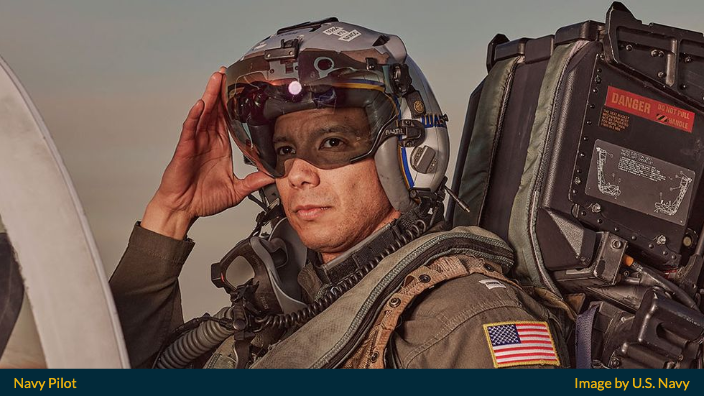
Navy pilots can wear glasses or contact lenses, as long as their vision corrects to 20/20.
Height & Weight Standards
- Height: 5’2” – 6’5”
- Weight: 103 – 245 lbs
Corrective Vision Options
- Glasses & Contacts: May be allowed, depending on mission requirements.
- LASIK Surgery: Approved for pilots.
Each candidate’s suitability for flight is assessed individually, including the necessity of prescription lenses.
More details on training, qualifications, and vision requirements in the next section.
Navy Pilot Vision Requirements
All Navy pilot candidates must pass an eye exam to assess visual acuity, color perception, and night vision. While 20/20 vision is preferred, glasses and contact lenses are allowed if they meet Navy requirements.
Key Vision Requirements
- NAVMED P-117 sets the official eyesight standards for Naval Aviators.
- Vision must be correctable for use in high-performance aircraft.
- Glasses must include protective features like glare reduction and light-responsive lenses.
- LASIK and other corrective procedures are covered in the regulations.
Ongoing Vision Testing
- Pilots must pass annual physical exams, including vision tests, to stay qualified.
- Results determine if corrective lenses are needed for flight duties.
- Routine ground and flight training are also required.
The Navy expects high visual standards for pilots—but glasses are allowed as long as vision is corrected to meet regulations.
Is It Possible to be a Navy Fighter Pilot with Glasses?
There’s no definitive yes or no—it depends on the type of glasses, vision correction, and Navy regulations.
What the Navy Requires
- 20/20 vision is the standard for all Naval Aviators.
- Some pilots are approved to wear glasses if their vision corrects to 20/20.
- Nearsightedness, farsightedness, astigmatism, and color blindness are evaluated during the flight physical exam.
Check Before You Apply
Each military branch has different rules for corrective lenses. If you’re serious about becoming a fighter pilot, verify the most current regulations before applying.
Is It Possible for Navy Pilots to Undergo Eye Surgery?
Naval Aviators must meet strict vision standards to qualify for flight training.
- Minimum vision requirement: 20/70 in each eye (correctable to 20/20).
- What this means: You must see at 20 feet what a person with normal vision can see at 70 feet.
Are Glasses or Contacts Allowed?
- Corrective lenses may not always be accepted—eligibility depends on individual assessments.
- Some pilots are approved with glasses if their vision corrects to 20/20.
What About Eye Surgery?
- LASIK or PRK may be an option but comes with risks, eligibility depends on Navy policy at the time.
- If glasses or contacts correct vision to 20/20, candidates may be eligible.
- Unsatisfactory results can lead to disqualification from flight service.
- The Navy evaluates surgical outcomes carefully before granting flight clearance.
Vision must correct to 20/20—but the Navy has strict policies on corrective lenses and eye surgery. Always check the latest requirements before applying.
More Information
Please note that this information may change anytime without notice. Contact your local Naval Officer Recruiter for the most up-to-date information regarding Navy Pilot jobs.
You will also find helpful information in this guide: Become a U.S. Naval Aviator.
Hope you found this helpful to your research and career planning.